
Osada: Farming Efficiency? Maybe...
At least if plans actually worked out

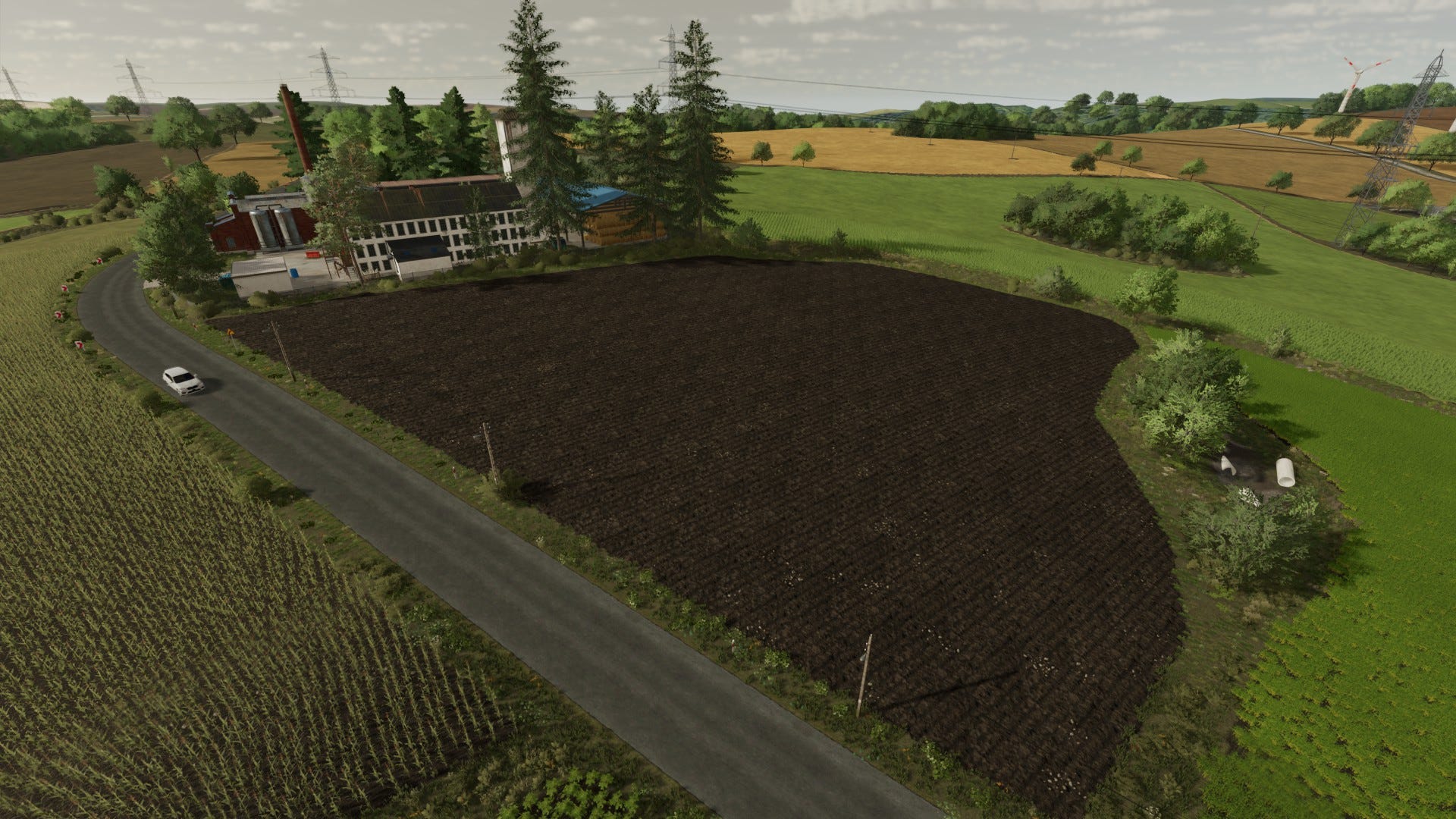
When I think of a vast wilderness I think of expanses of land, free for you to do whatever you wish with. That’s entirely unlike Osada where fields are fit in around the features of nature, the human development, between who owned what, fifty, even a hundred years ago.
It’s not the most efficient of design, but it is natural. It makes sense that when land is tight, and fields are small, they skew and bend towards the features around them. I think it makes things interesting. And, yes, I do have some favourite fields.
If I move to The Western Wilds this could be a concern. I don’t have to make the fields all square and rectangular but for an efficient farm it may be what’s best.
The thing is efficiency isn’t the only measure.
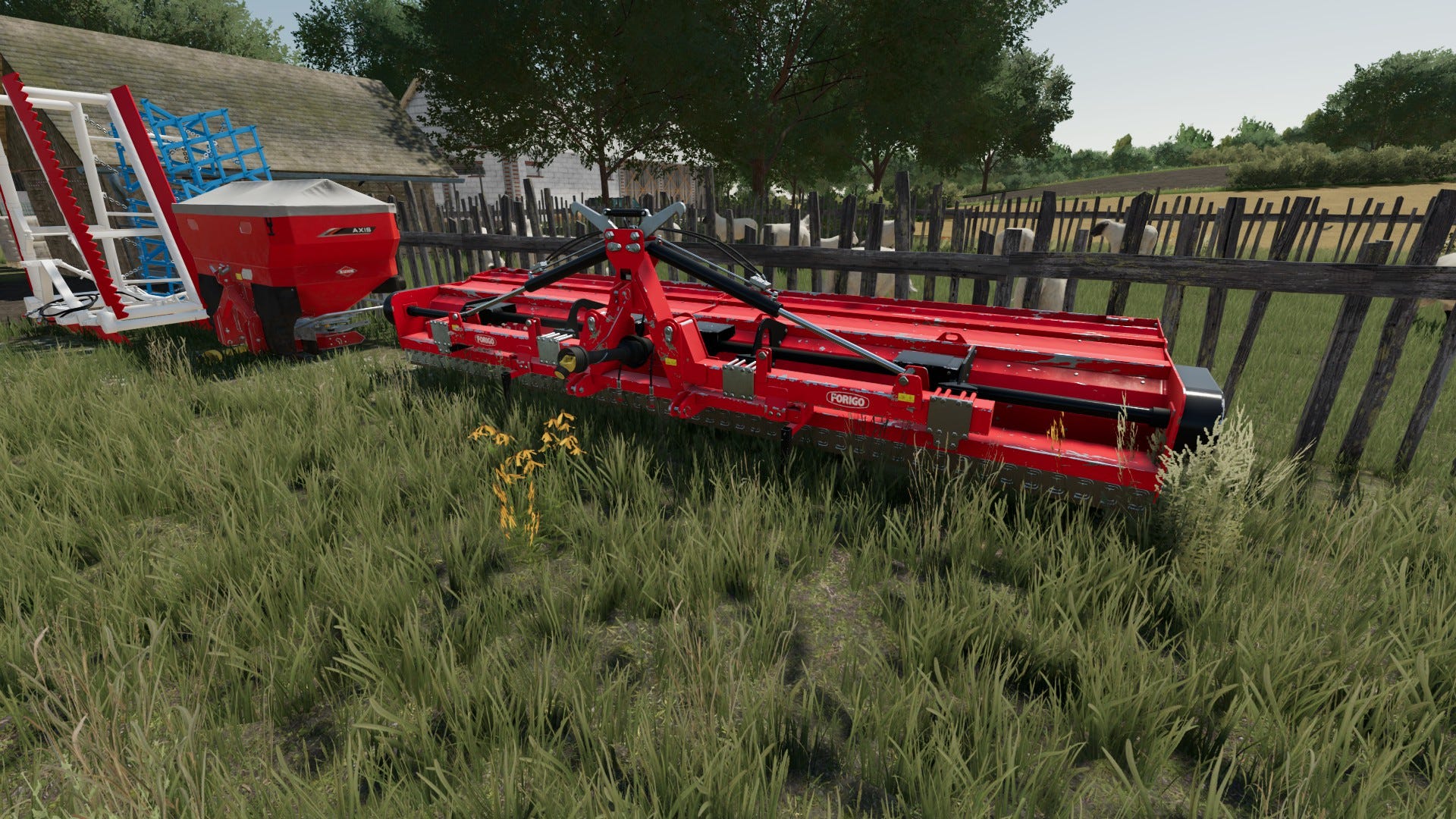
This is my Forigo DT25 600. It was one of my first purchases after the cultivator I got for contracts. It was affordable, it was a mulcher, and it could also be converted to mow grass; making hay and silage being a big part of contracting jobs.
It was an absolutely superb purchase when I was starting out. At six metres wide, being hitched right to the back of the tractor, and with multiple uses it made some jobs very easy. So, we have a lot of efficiency there. The difference now is if I move to The Western Wilds I might have a lot more grass to take care of. I could be making a lot more silage, and a lot more hay, and a mower setup approaching ten metres rather than six would make more sense.
No longer is the Forigo the most efficient option for me—presuming I can afford the replacement. Like those interesting fields, though, I’ve grown attached to it. I’ve become used to how it functions for me, and I enjoy my time driving up and down pastures with it.
It’s definitely not the quietist bit of machinery, it’s a little “rattly,” but I kind of zone out when I’m using it. Everything falls into a pattern and rhythm for me.
A bigger setup might make more sense but it’s not something I’m craving. It’s not on the top of my priority list. Moving to a new farm will involve a lot of stress, and a lot of hard work to get going and into a new step, so having pieces of machinery I find interesting and enjoyable to use will be a way to keep me grounded. It’s a piece of familiarity that keeps me linked to the ways I’ve always done things. And in some ways that type of history is important to me, even if I’m not out and out for sentimentality.
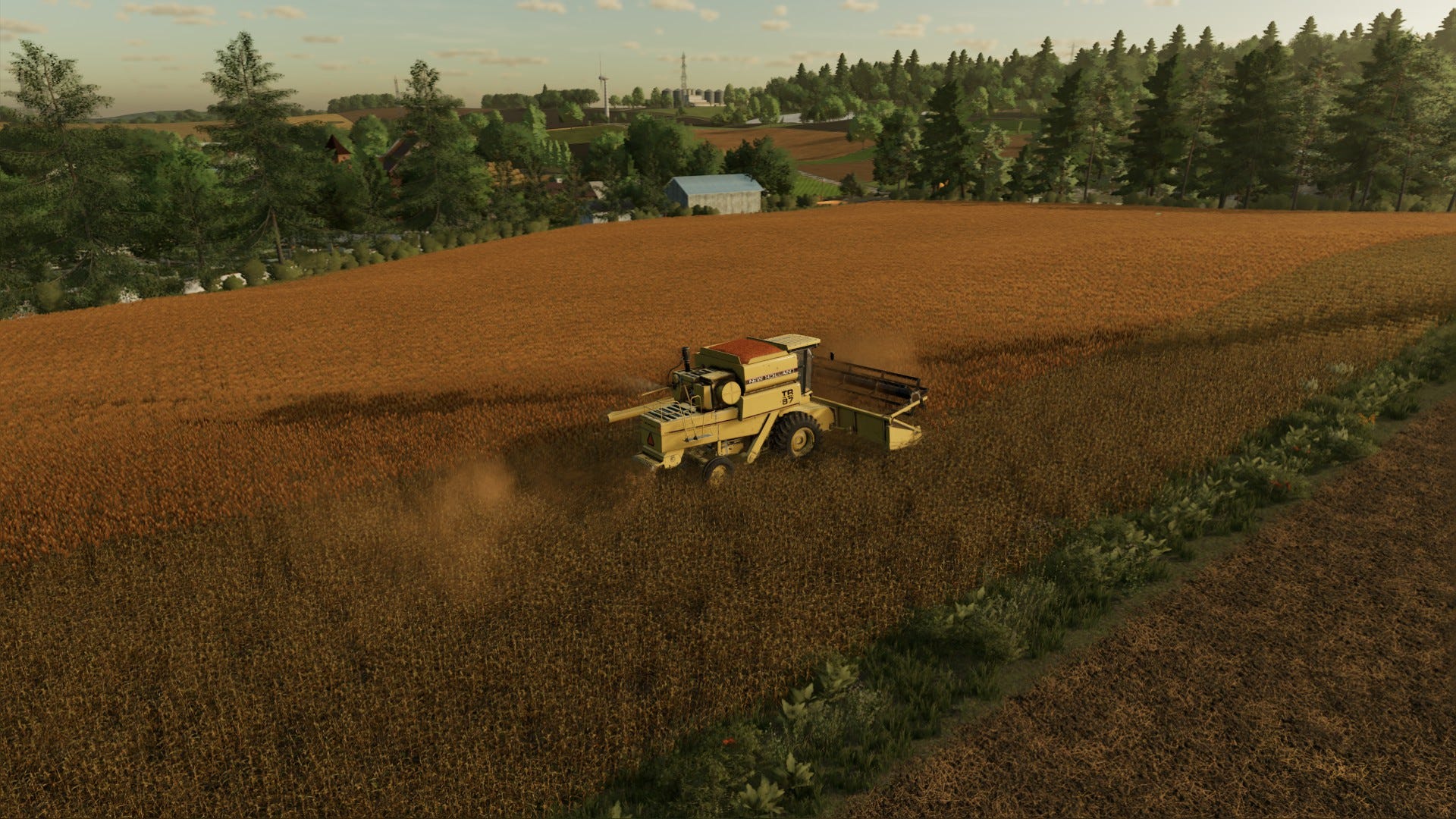
Still, there isn’t much space for sentimentality when there are jobs to be done. The first thing I had to get out of the way this month—after all the excitement of announcing my big plans last month—was getting the crops harvested. I had both sorghum and wheat to get off the fields. That meant early mornings, as early as I’m willing to let myself go.
Another thing about a move to a new farm—apart from field shapes—struck me as I spent the early hours collecting the sorghum; my interest in the light. Or more my relationship with light.
Light has a big effect on my mood. I’m happy in sunshine, even if the cab in an un-air-conditioned harvester can get very hot. And I’m happy on crisp, clear winter days. I think I’m even happy if it’s raining. Every farmer knows the value of rain.
Where I’m not happy is in muddy light, or transitional light. Everything is dulled, everything is murky. It brings me down not to have a clear view on my surroundings. I’m not saying this golden morning was “muddy” but it did remind me of some autumn days, late autumn usually, when it feels like the world is closing in on you. I don’t know how the different seasons offer their light in the west of the US but it’s those kinds of patterns, as the year passes by, that makes a new area interesting; getting used to how the days change over a month and how the months change over a year. I’m still not sure I completely know Osada’s patterns five years on.
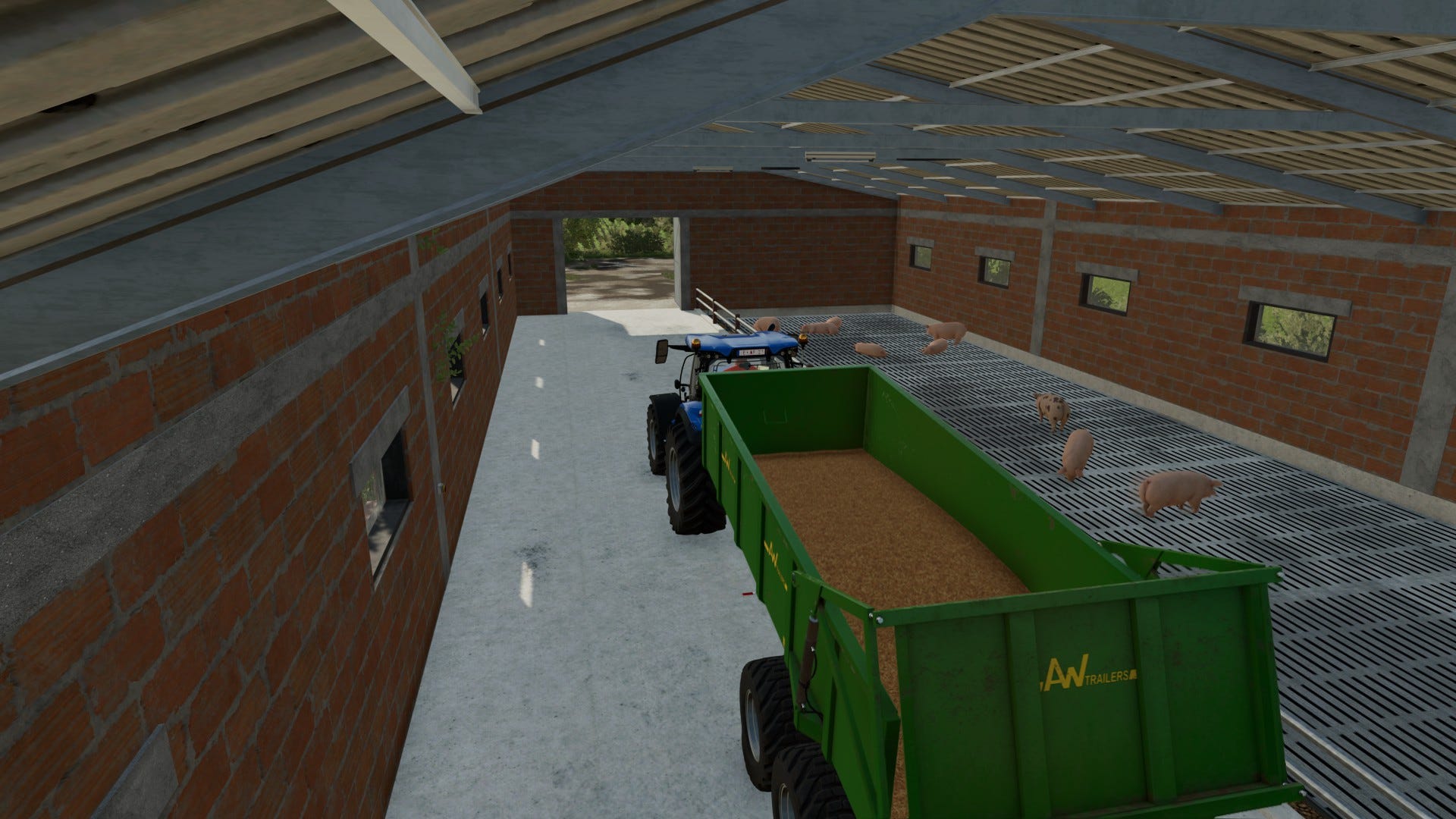
The sorghum I was harvesting is to go towards pig food. However, seeing as I was slowly building up my stock over the years, and have just begun to approach the maximum capacity of 108 pigs in my sty after starting out with much fewer pigs, I’m not sure how much crop I actually need.
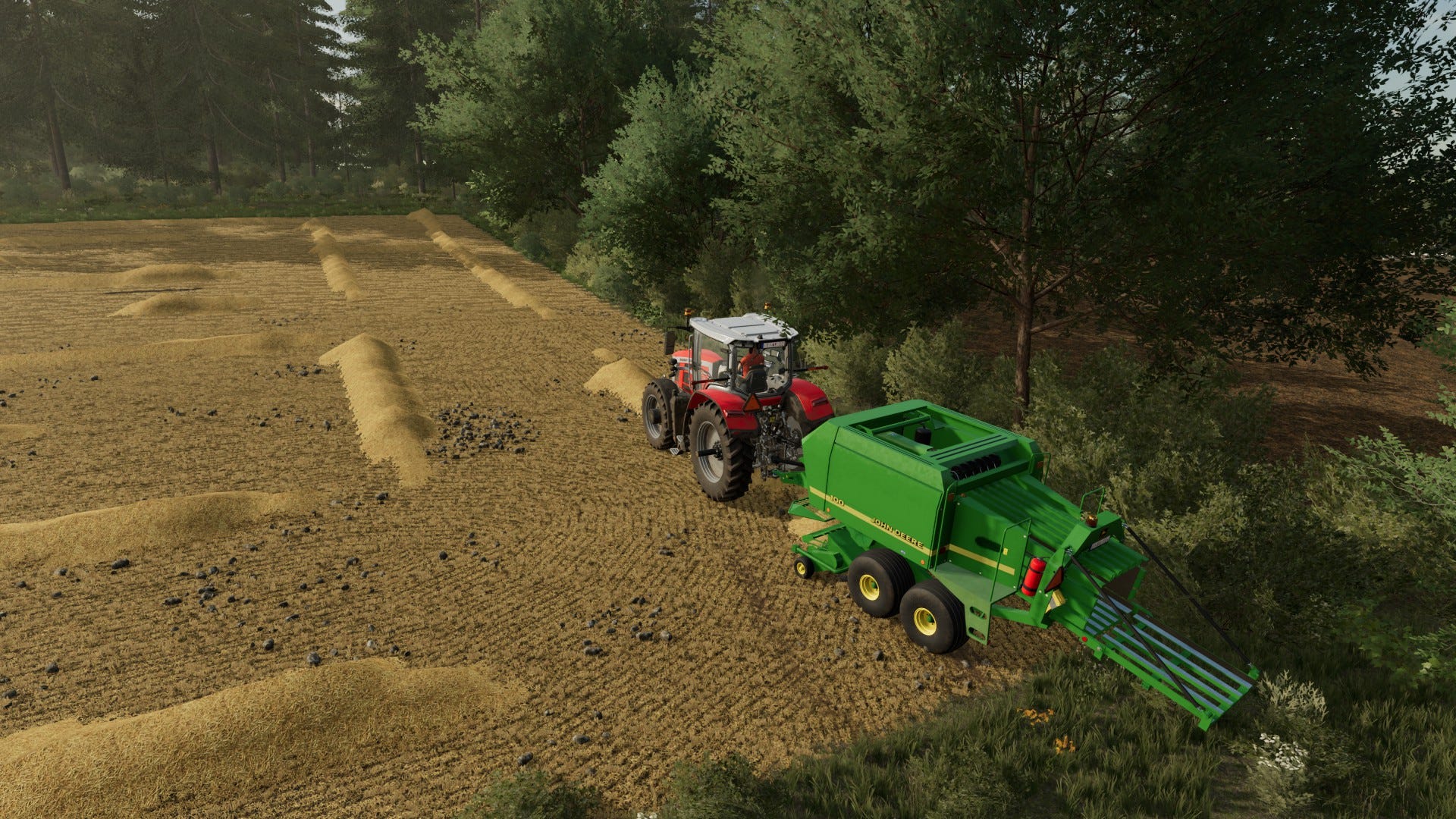
The same goes for the straw I collected from the wheat field I harvested. I could keep producing manure with my cattle and straw or I could wash it all away. I have, at most, a year left in Osada so keeping things in stock, or in reserve, when I know I’m leaving isn’t the most financially sensible plan.
I think over the next month or two I’ll need to calculate how much I actually need. What’s necessary to keep me going until I sell I everything on the farm next summer. Then, when I know how much I need, I can sell off the excess when it’s at its best price in the meantime.
Of course, I could get my calculations wrong, but I think the benefit from selling the excess at its highest sale point will make up for it if I have to buy any emergency rations. At least that makes an intuitive sense to me.
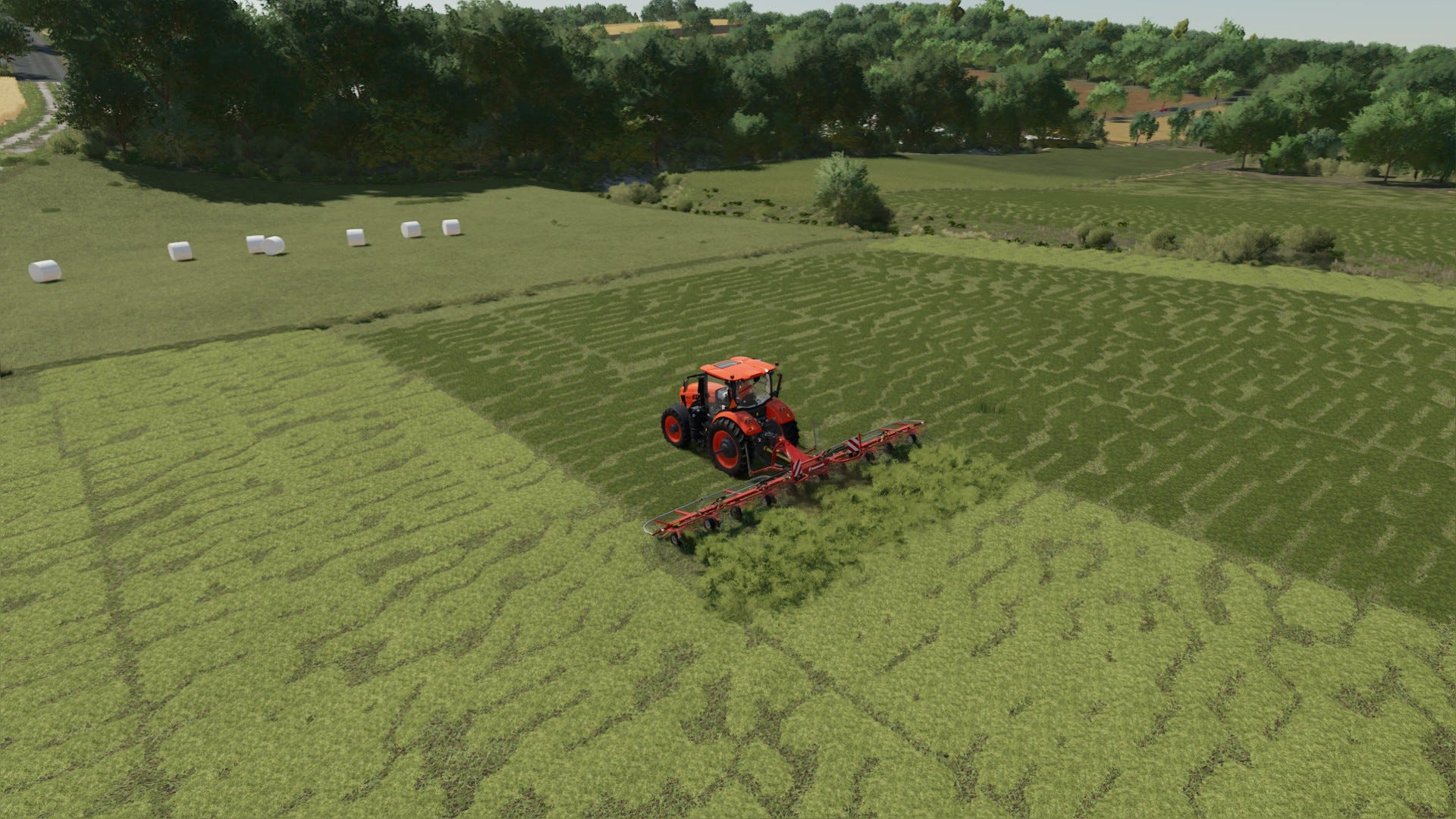
After the fields were turned around and canola put straight in where it was needed it was onto what has been my most lucrative contracting job; grass management and baling.
Not only has it been lucrative but the excess bales I’ve been lucky to be allowed keep have been enough to keep some sheep going, and after I built up some stores it was enough to get my dairy pen going. So, really, it’s essential I do these jobs lest I end up having to buy a grass field for myself at the last moment.
The amount of mowing I have to do takes a long time, but it’s definitely worth it. I think I came out €45,000 richer at the end of it, plus I had a decent amount of hay bales. Which is another thing I’ll have to look at selling off, maybe in January.
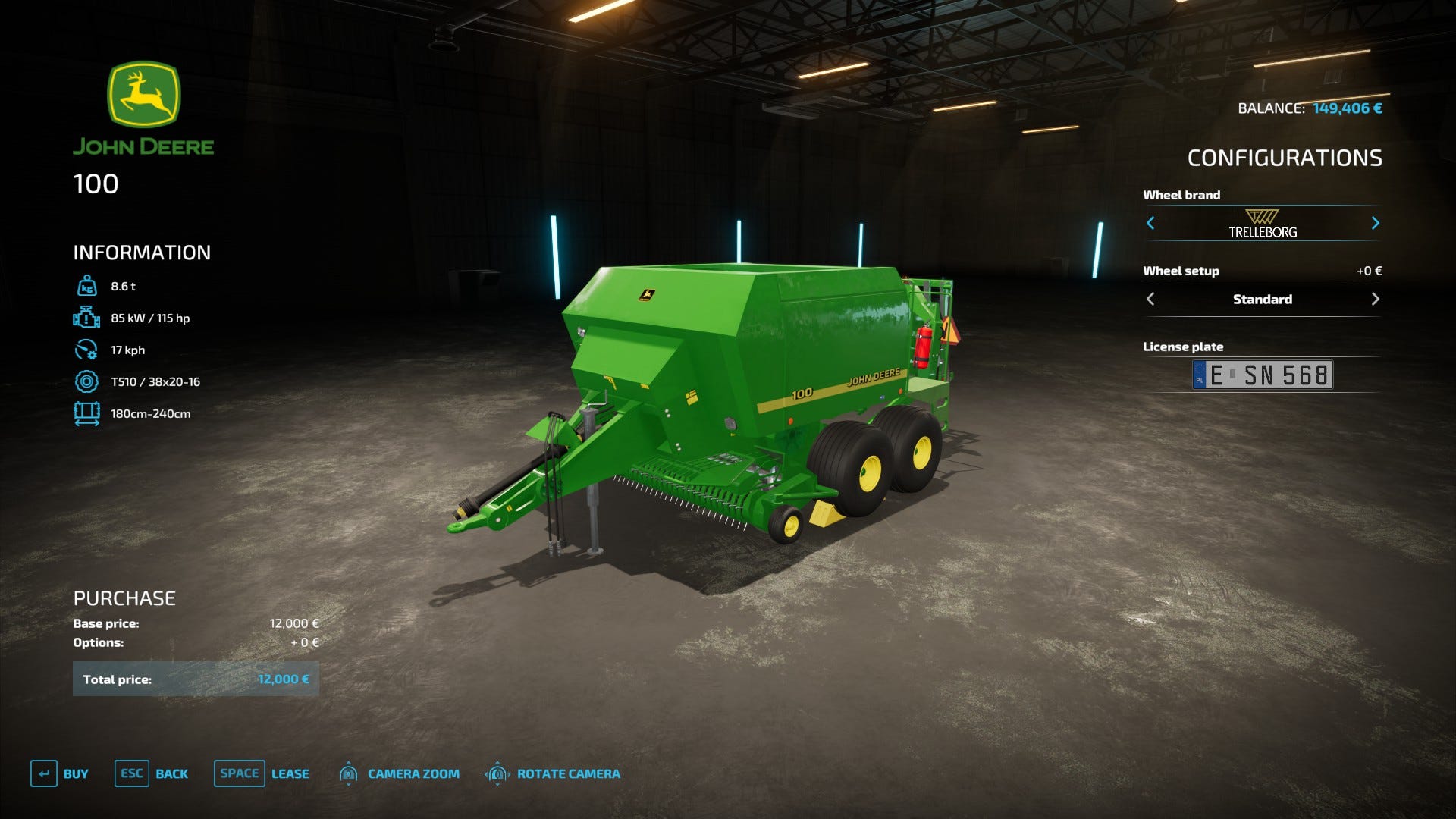
Something I have to keep in mind when I move to my new farm is that I’ve been borrowing equipment for the grass contracts. Mainly it was because I was waiting for used equipment to come up in the second hand market to round out my own stores.
I do have a large chunk of the equipment I need. A second hand tedder came up that was bigger than what I was getting offered with the contract equipment. I have the mower I mentioned earlier, and just this month I got a fantastic deal on a new-old piece of John Deere equipment. A square baler that will do great for straw, grass or hay, but maybe not for silage.
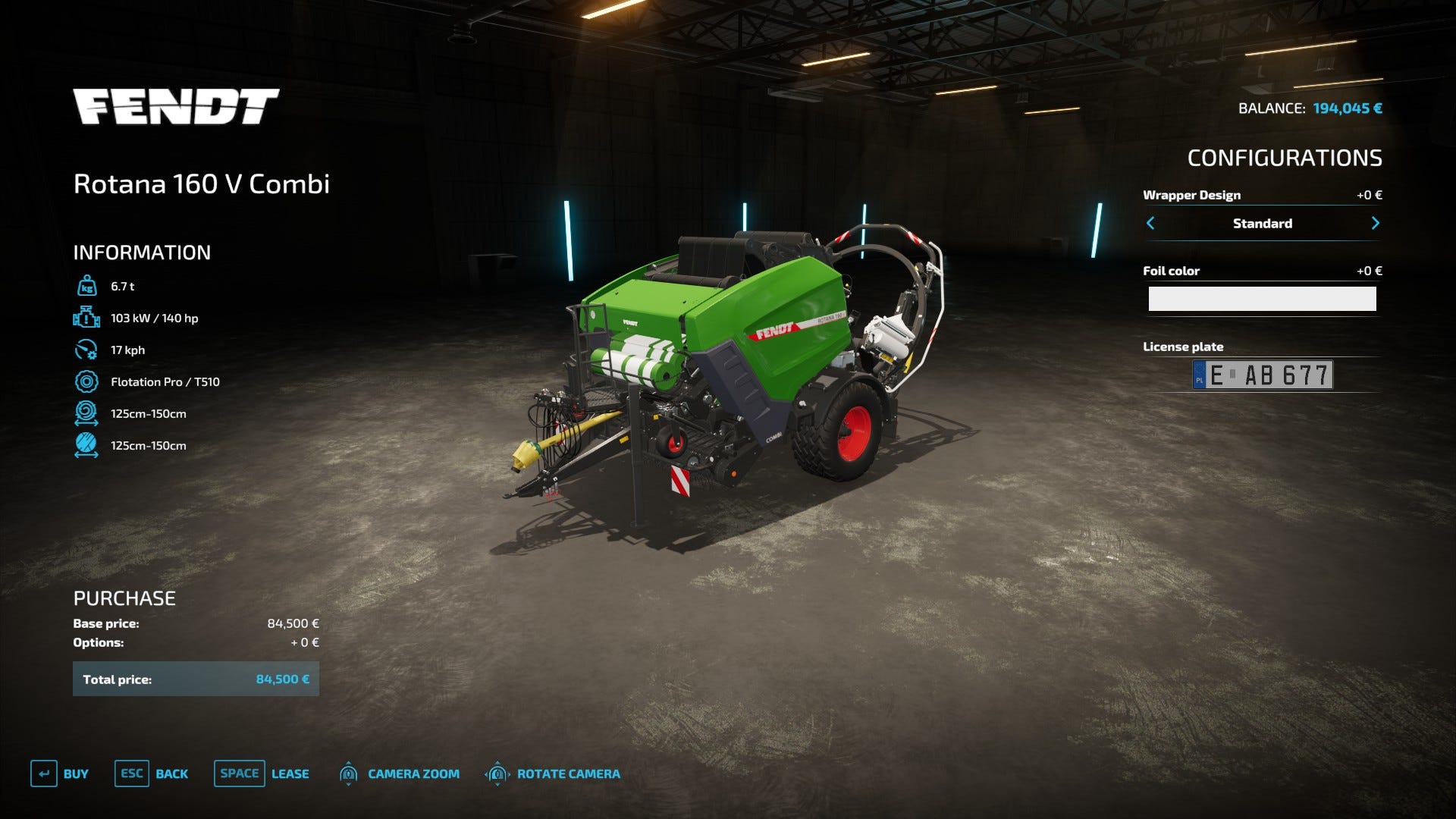
I have it in my mind to buy an automatic baler and wrapper like this. It could be a huge chunk of the cash I have available to take with me, and maybe it’ll be what I buy when I arrive to The Western Wilds. It’s just, with some experience, I’ve found the process of wrapping bales after you’ve done all your baling a little stop start. You have to do all the initial work, all the baling, then come back and wrap them all. If I have to stop for a few moments after I’ve baled them to automatically wrap them as part of the process it feels a little more streamlined, and organised. It might not save time but it’s fewer stages of work to think about.
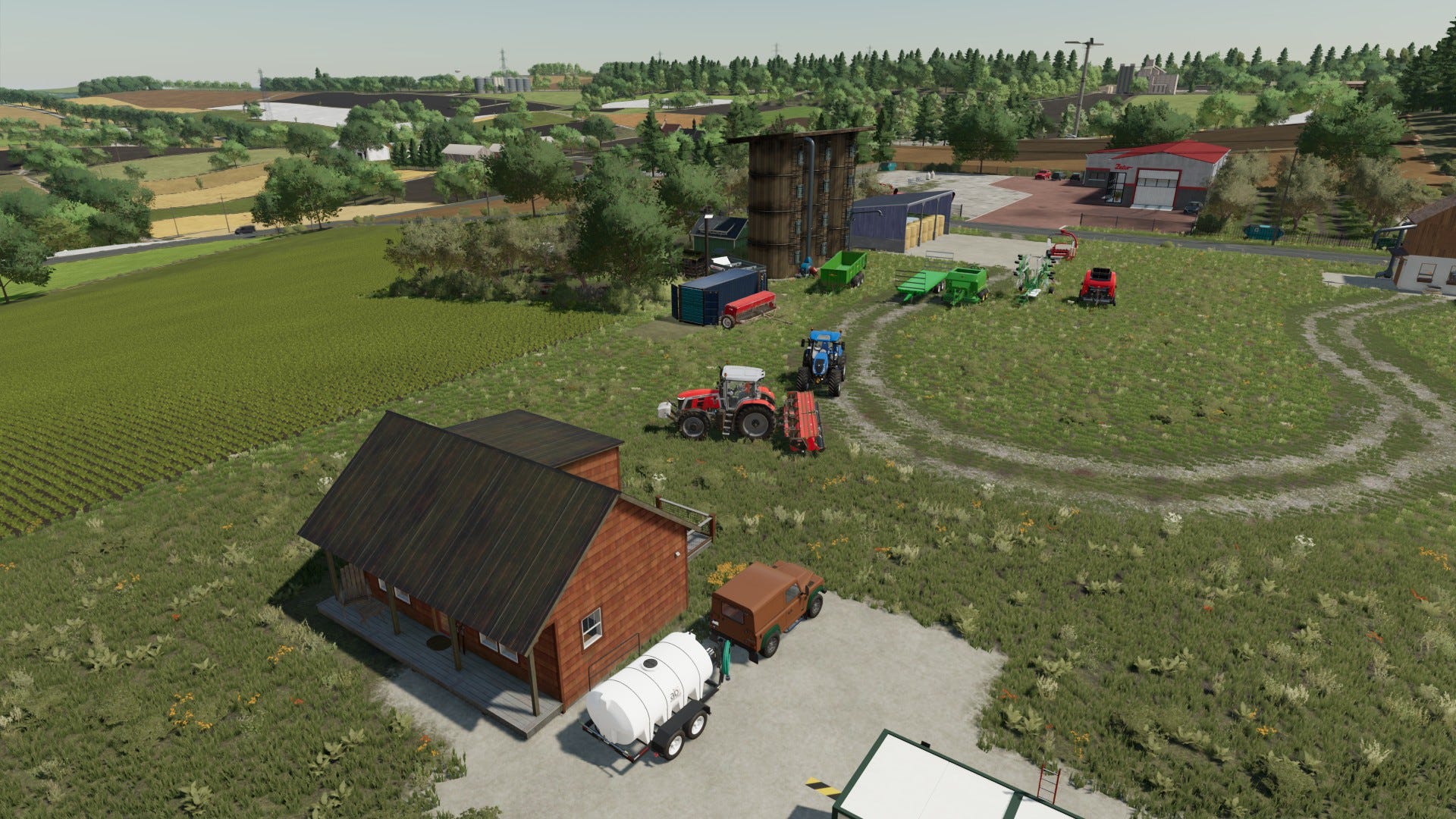
And speaking of organised, you can see my yard is absolutely not organised during the middle of August. There’s equipment everywhere.
Maybe it’s simply my way? That I clean up after the job has been done, but if I’m hiring employees, or even temporary workers, I can’t let them come into something like this, can I? It’s a lawsuit waiting to happen.
Sure, I know where everything is. I have a method to my own madness. I just don’t think others will quite be on the same level as my madness; your quirks being a personal thing and taking decades to figure out even for the husband or wife of a farmer.
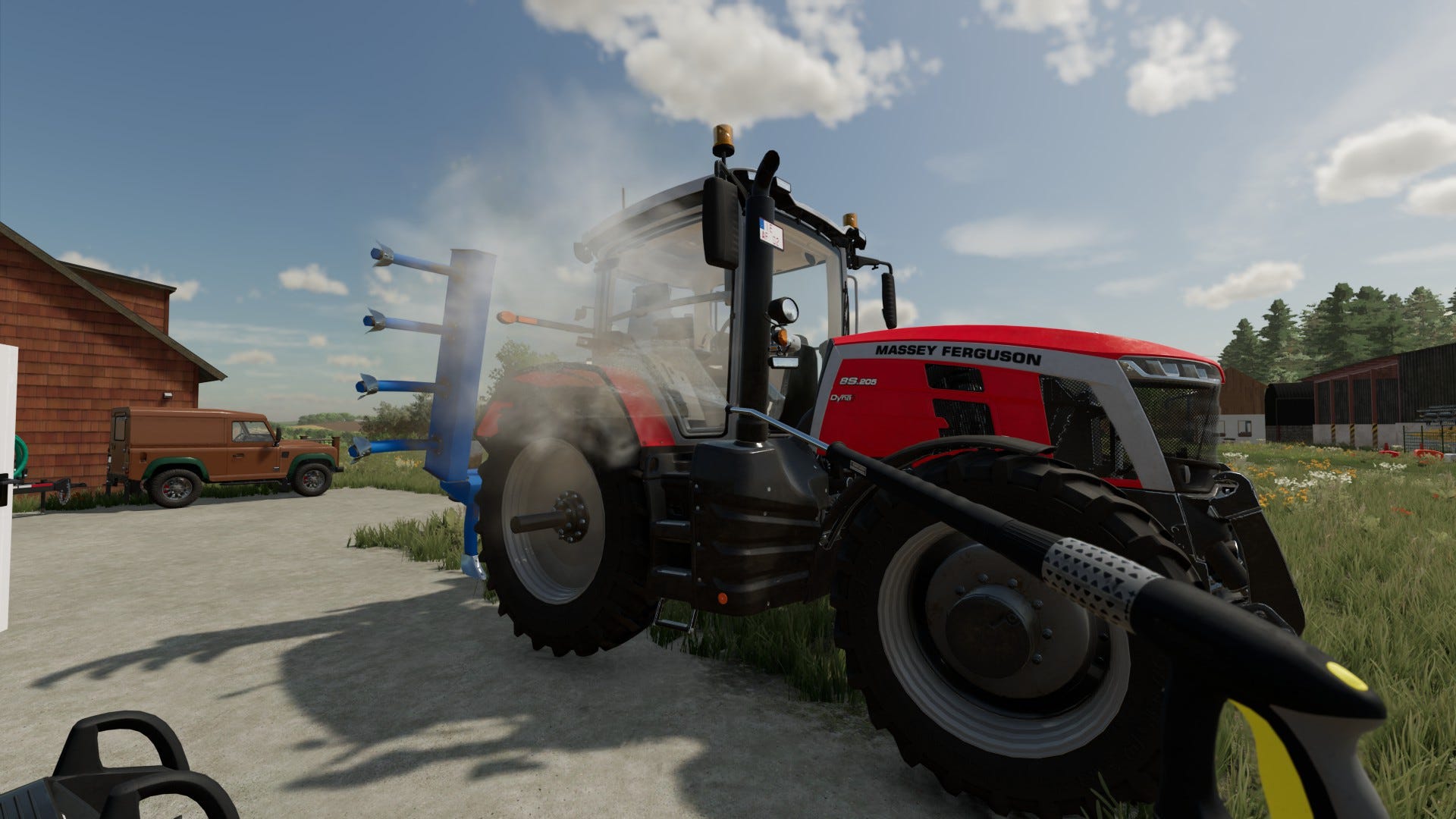
I’m not a complete mess, though. Like I said I do clean up after a particular job is done. Even then, back when I was a teen working on The Old Farmer’s farm I hated power-washing the machinery after every job. My attitude was that it was only going to get dirty again. Sometimes within minutes.
That’s changed for me as I create my own farmyard. I have a little pride in how my machinery works and looks. It reflects well on me, as a farmer, but equally it feels better to be driving something not caked in mud.
When I move, and it’s now looking more likely it will be to the Western Wilds, the farmyard setup will be entirely new to me. It’ll be a chance to start afresh.
In the very first blog I wrote I spoke about how I inherited a small plot of land. Looking at the plot the first time I thought The Old Farmer undersold the size of it when he said it was small; it seemed fairly large to me. Once I actually began working with it I realised the truth of his point.
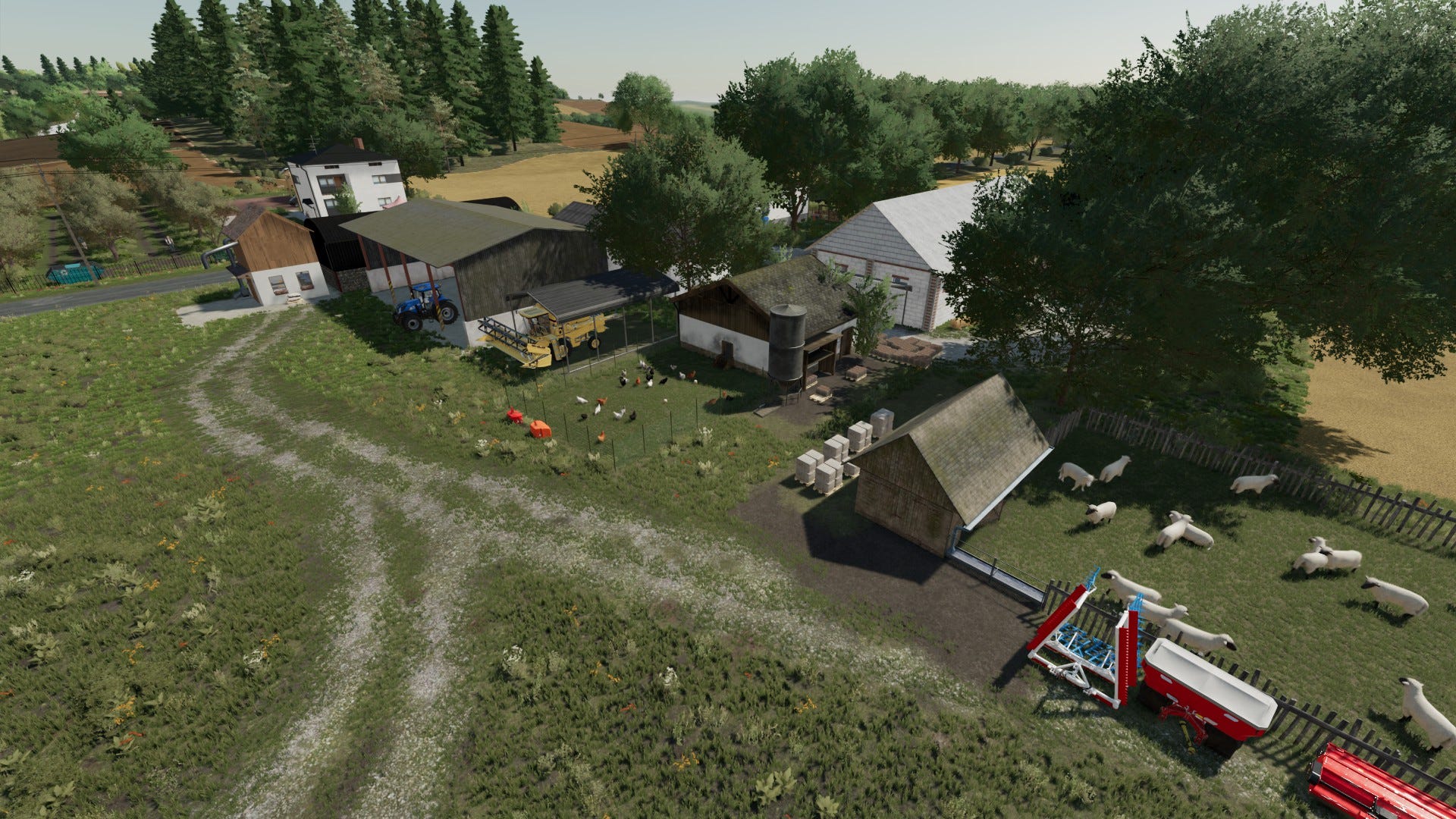
After I built up around the shed that was in place... After I put in the sheep pen, the chicken coop, the grape storage, the crop silos, the bale storage, I realised there was just enough space for me to turn around in, reverse in, all while storing some equipment in the open temporarily. I looked at getting new sheds in, and I did get one put in, but some of the sheds I could afford were already far too large for my land. There literally wasn’t enough space for even medium sized sheds.
I’m sure when I move to The Western Wilds it’ll be a mad rush to get the basics in quickly, and to do it on a budget, but if there’s anything the media has told me about the American west it’s that space isn’t a problem. Maybe I’ll be able to build a farmyard that turns out to be both efficient and personal to me. Of course we all know how plans work out, so I’m not banking on it. Especially with the initial painful cost of setting up, and all the things I’m sure to forget I need that I didn’t plan for. And which end up costing at least an arm, if not a leg.
Still, it’s something I’m looking forward to. For now I have to keep saving my money, keep making smart investments when they come up, and keep working whatever jobs may pop up if I’m to have the cash to make a farm that’s personal to me. So, really, there’s no more time for writing, it’s back to the grindstone. I’ll talk to you again when my mind comes up with whatever crazy rubbish it is that I write. At least if I don’t drift off with the late summer light I love so much, as I fill out the rest of the contracts available to me.